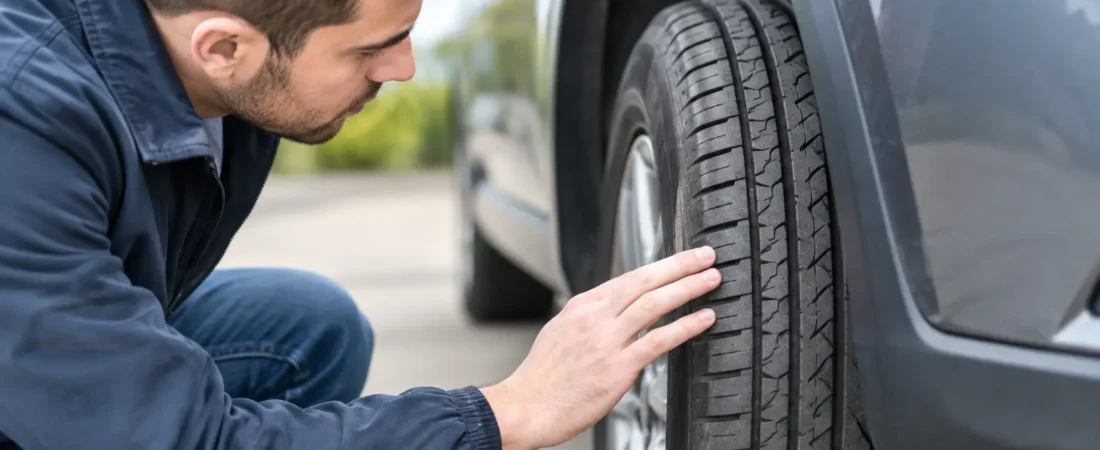
A wet Bay of Plenty morning can quickly show up tyres that are past their best. When water sits on the road, the grooves in your tyres need to clear it away so the rubber can maintain contact with the surface. Checking tyre tread regularly is one of the simplest ways to protect your braking, steering and confidence behind the wheel.
Tyres do more than help your car pass a WOF. They affect how your vehicle responds when you need to stop for traffic, take a roundabout in the rain or carry the family to the beach. A quick check at home can reveal a problem early, while a professional inspection can identify the reason behind uneven wear before it becomes a bigger repair.
Why checking tyre tread matters
Tread is the patterned rubber around the outside of the tyre. Its channels and grooves create pathways for water to escape from beneath the tyre. As the tread becomes shallow, those pathways have less capacity to move water, increasing the risk of aquaplaning on wet roads.
Reduced tread can also make a vehicle feel less settled when braking or cornering. The difference is not always obvious on a dry, straight road, which is why tyres can seem fine right up until poor weather or an emergency stop exposes the loss of grip.
For Tauranga and Mt Maunganui drivers, tyre condition matters year-round. Commuting, school runs, motorway travel and trips over the Kaimai Range all place different demands on your tyres. utes, vans and 4x4s carrying tools, equipment or passengers need particular attention, as heavier loads can accelerate wear when tyre pressures are not right.
The legal tread limit in New Zealand
For most passenger vehicles in New Zealand, tyres must have at least 1.5 mm of tread depth in the main grooves across at least 75% of the tyre’s width, around the tyre’s full circumference. This is the minimum legal requirement for a WOF, not necessarily the point at which a tyre will perform at its best in heavy rain.
Many drivers choose to replace tyres before they reach 1.5 mm, especially if they regularly drive in wet conditions, carry family members or travel longer distances. The right time depends on the tyre’s overall condition, the vehicle, where you drive and how much grip you need from it. A tyre with legal tread may still need attention if it is cracked, damaged or wearing unevenly.
Find the tread wear indicators
Most tyres have built-in tread wear indicators. These are small raised bars set into the main grooves of the tyre. Look along the sidewall for small triangle, arrow or TWI markings, then follow them across to the groove.
When the tread surface is level with these bars, the tyre is at or very close to its legal limit. Inspect more than one point around the tyre. Wear is often uneven, and the lowest section is what matters.
How to check your tyre tread at home
Park on level ground, apply the handbrake and turn the front wheels so you can see the tread clearly. Do the check in good light if possible, and do not put your hands near moving parts or crawl under a vehicle that is supported only by a jack.
Start by looking at the full width of each tyre. Check the inner edge, centre and outer edge rather than only the section that is easiest to see. On the rear tyres, use a torch or turn the vehicle slightly if you need a clearer view. If your vehicle has a spare wheel, include that in your inspection too.
A tread-depth gauge is the clearest way to measure the remaining tread. They are inexpensive, easy to use and give a measurement in millimetres. Place the gauge in a main groove, avoiding the raised wear indicator, and take readings at several positions around the tyre. Compare the readings across the tyre’s width as well as between tyres on the same axle.
A coin check may offer a rough visual indication, but it is not a precise substitute for a gauge or workshop inspection. If you are unsure whether the tread is close to the legal limit, have it checked properly rather than guessing.
While you are checking depth, look for these signs that need prompt attention:
- cracks in the sidewall or between tread blocks
- cuts, punctures, bulges or exposed cords
- stones, nails or screws lodged in the tread
- a tyre that looks noticeably flatter than the others.
A bulge, exposed cords or a deep cut can mean the tyre has suffered structural damage. Do not rely on an inflation top-up to solve these issues. Arrange an inspection as soon as practical, and avoid driving if the tyre appears unsafe.
What uneven tyre wear can tell you
Tyre wear patterns often provide a useful clue about the vehicle. Wear through the centre of the tread commonly points to over-inflation. Wear on both outer shoulders can be associated with under-inflation, although driving style and load can also contribute.
If one edge is wearing faster than the other, the vehicle may need a wheel alignment or there may be a suspension component requiring inspection. Patchy, scalloped or cupped wear can be linked to worn shock absorbers, wheel balance issues or suspension concerns. These patterns do not automatically identify a single fault, but they are worth investigating before fitting new tyres.
This is where replacing tyres without addressing the cause can be a false economy. New tyres may wear prematurely if alignment, steering or suspension issues are left unresolved. A workshop can inspect the tyres alongside the vehicle’s related components and explain what work is genuinely needed.
Check tyre pressure at the same time
Tread and tyre pressure work together. Incorrect pressure changes the tyre’s contact patch with the road, which affects wear, fuel use and handling. Check pressures when the tyres are cold, ideally before driving or after the vehicle has been parked for several hours.
Use the pressure recommendation on the vehicle placard, usually found inside the driver’s door opening or in the owner’s manual. The figure printed on the tyre sidewall is generally the tyre’s maximum pressure, not the recommended running pressure for your vehicle.
If you are carrying a full load, towing, or taking a loaded van or ute away for work, check whether your vehicle manufacturer specifies a different pressure setting. It is also sensible to inspect the spare before a longer trip. A spare that has been forgotten for years may not be ready when you need it.
When should tyres be inspected professionally?
A WOF inspection includes tyre checks, but it should not be the only time you think about tread. Check your tyres monthly, before a road trip and after a hard impact with a pothole or kerb. Book an inspection sooner if the car pulls to one side, the steering wheel vibrates, braking feels less assured, or you notice uneven wear.
If your tyres are nearing the legal limit, a professional assessment helps you plan rather than rush into a replacement after a failed WOF. It also gives you the chance to discuss tyre options that suit your vehicle, driving habits and budget. The cheapest tyre is not always the best value if it does not deliver the grip, load rating or durability your vehicle needs.
At Pit Stop Tauranga, our team can check tyre condition, pressures and wear patterns, then look for any alignment, brake or suspension concerns that may be affecting tyre life. You have come to the right place for practical advice, quality workmanship and clear recommendations for keeping your vehicle safe on the road.
A few minutes spent checking your tyres before the next wet commute can make a meaningful difference. If anything looks uneven, damaged or close to the limit, get it looked at early and drive with greater peace of mind.