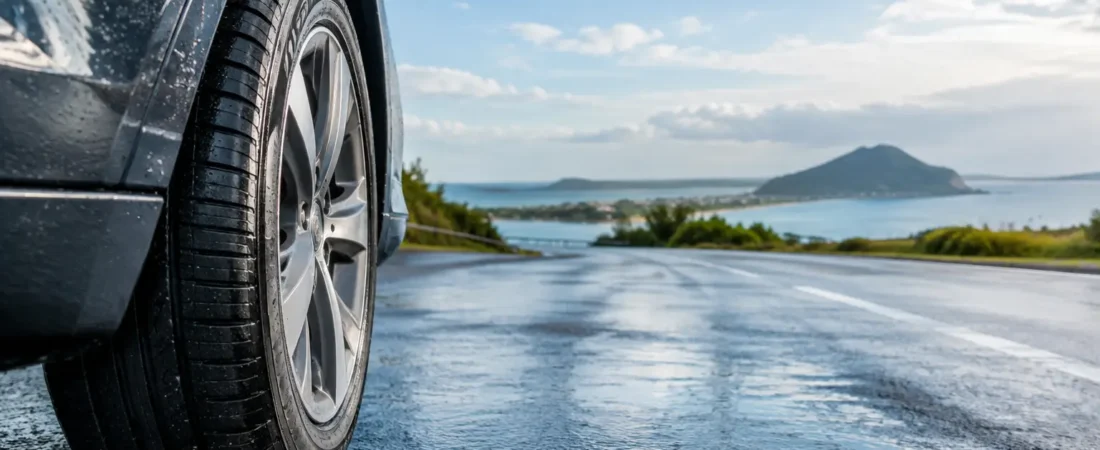
A heavy Bay of Plenty downpour can turn a familiar drive into a very different one. Water gathers in wheel tracks, visibility drops and braking distances increase quickly. The best tyres for wet roads are not simply the most expensive tyres on the rack. They are tyres that suit your vehicle, have a tread pattern designed to clear water effectively, and are kept in safe condition.
For Tauranga and Mt Maunganui drivers, wet-weather tyre performance matters on daily school runs, motorway commutes and trips out of town. A good set of tyres gives you more control when the road surface is slick, but it works alongside sensible driving, correct tyre pressures and well-maintained brakes. Getting these basics right is one of the most practical ways to protect your family and keep your vehicle reliable.
What makes a tyre good in the wet?
A tyre needs to do one crucial job on a wet road: move water away from the part of the tyre touching the surface. If it cannot do that fast enough, a film of water can build between the rubber and the road. This reduces grip and, in severe cases, can lead to aquaplaning.
Look closely at a quality wet-weather tyre and you will usually see wide grooves running around the tyre and smaller channels across the tread. The wide grooves provide routes for water to escape, while the smaller cuts in the tread, often called sipes, help the tyre grip a damp or uneven road surface. The rubber compound also matters. Softer, modern compounds can remain more flexible in cooler, wet conditions, improving traction when braking and cornering.
A tyre designed for strong wet grip may wear differently or cost more than a basic budget option. That does not mean every driver needs a premium performance tyre. It does mean the cheapest option is not always the best value if your car regularly carries children, travels on motorways or covers high kilometres through all seasons.
Best tyres for wet roads: choose for your vehicle and driving
There is no single best tyre for every car in Tauranga. The right choice depends on the vehicle, the loads it carries and where you drive most often. A small hatchback used around town has different needs from a family SUV, a work ute or a van carrying equipment.
For most everyday cars and SUVs, a reputable touring tyre with a strong wet-grip focus is a sensible starting point. These tyres are designed for predictable braking, stable steering and a comfortable, relatively quiet ride. They generally offer a balanced lifespan too, which makes them a practical choice for drivers who want everyday safety without compromising on value.
If you cover long motorway distances, look for a tyre with well-regarded wet braking performance and good resistance to aquaplaning. At open-road speeds, water clearance becomes especially important. A tyre that feels fine around town can feel less settled through standing water at speed, particularly once the tread wears down.
Owners of 4x4s, utes and vans should choose tyres with their normal load and driving conditions in mind. An aggressive all-terrain tread may be useful on loose gravel or off-road surfaces, but it can be noisier and may not offer the same wet-road braking performance as a road-focused tyre. If most of your driving is on sealed roads, a quality highway-terrain or road-oriented commercial tyre can be the better fit.
Electric and hybrid vehicles also deserve careful tyre selection. Their extra weight and instant torque can place greater demands on tyres, while low road noise is often a priority. Tyres approved for the vehicle size, load rating and speed rating, with dependable wet grip, will help preserve the calm, efficient drive these vehicles are known for.
Do not ignore the tyre label and specifications
When comparing options, wet-grip ratings and manufacturer information can be useful guides, but they should not be considered in isolation. Check that the tyre is the correct size for your vehicle and meets the required load and speed ratings. Fitting a tyre that is unsuitable for the vehicle can affect handling, comfort, fuel use and insurance requirements.
Your driving habits matter as well. A driver who travels short urban distances may place more value on comfort and longevity. Someone commuting between Tauranga and surrounding Bay of Plenty towns in all weather may reasonably prioritise wet braking and motorway stability. A technician can help explain the differences in plain language, so you can make a choice that suits your budget and your vehicle.
Tread depth is your wet-weather safety margin
Even an excellent tyre cannot perform properly once its tread has worn away. New tyres have deep channels to clear water. As the tread gets shallower, those channels carry less water and wet-road grip declines.
The legal minimum tread depth in New Zealand is 1.5 mm across the main tread area. Legality, however, is not the same as ideal wet-weather safety. Many drivers choose to replace tyres before they reach that limit, particularly around 3 mm, because the reduction in wet grip becomes more noticeable as tread wears down.
Check your tyres regularly, not only before a WOF inspection. Look for the built-in tread wear indicators in the grooves, and inspect the inner and outer edges as well. Wear that is greater on one shoulder than the other can indicate an alignment issue, while wear concentrated in the centre may point to over-inflation. Feathered or uneven tread can affect grip and make the drive feel less precise.
If you are unsure what you are seeing, you have come to the right place. A tyre inspection can identify whether the concern is normal wear, wheel alignment, suspension wear or simply a tyre nearing the end of its safe service life.
Tyre pressure changes how your car behaves in rain
Correct pressure helps the tyre hold its intended shape against the road. Under-inflated tyres can feel vague, heat up excessively and wear faster on the shoulders. Over-inflated tyres can reduce the size of the contact patch and contribute to centre tread wear. Neither is helpful when the road is wet.
Check pressures at least once a month, and before a long trip, when the tyres are cold. Use the vehicle manufacturer’s recommended pressures, normally found on a placard inside the driver’s door opening or in the owner’s manual. The number on the tyre sidewall is a maximum pressure rating, not usually the pressure your vehicle should be running.
Do not forget the spare tyre if your vehicle has one. Finding a flat spare during a wet roadside stop is an avoidable frustration. For vehicles carrying heavier loads, such as work vans or loaded utes, follow the manufacturer’s guidance for loaded tyre pressures.
Four tyres, or two? Where new tyres should go
Replacing all four tyres together gives the most consistent handling, especially if the existing tyres are worn or are different types. Matching tread patterns and similar tread depths help the vehicle behave more predictably under braking and through standing water.
When replacing only two tyres, the usual recommendation is to fit the newer tyres to the rear axle, regardless of whether the vehicle is front-wheel drive, rear-wheel drive or all-wheel drive. This helps maintain rear-end stability on wet corners and can reduce the chance of the rear of the vehicle losing grip first. There can be exceptions based on vehicle design, tyre condition and manufacturer guidance, so it is worth asking your technician rather than relying on a one-size-fits-all answer.
For all-wheel-drive vehicles, tyre circumference can be particularly important. Significant differences in tread depth between tyres may place extra strain on parts of the drivetrain. Check the vehicle manufacturer’s requirements before replacing one tyre only.
Wet roads demand more than good tyres
Tyres are your only contact with the road, but they are part of a wider safety system. Worn brake pads, ageing shock absorbers or poor wheel alignment can all make a vehicle less composed in the wet. Good shocks help keep tyres in contact with the road over bumps, while effective brakes and a functioning ABS system help you slow down with greater control.
Driving technique matters too. Leave more following distance, reduce speed before bends and avoid sudden steering, braking or acceleration inputs. If you do aquaplane, ease off the accelerator gently, keep the steering straight where possible and avoid stamping on the brakes. Let the tyres regain contact with the road before making a stronger correction.
If your steering wheel vibrates, the car pulls to one side, or you notice reduced grip in rain, arrange a check before the next long trip. Pit Stop Tauranga can assess tyre condition, pressures, wheel alignment, brakes and suspension to help identify what your vehicle needs. A little attention before the next rain band arrives can make every wet-weather journey feel calmer and more controlled.